Embroidery Studio
Please contact us for more details.
Room
Benefits
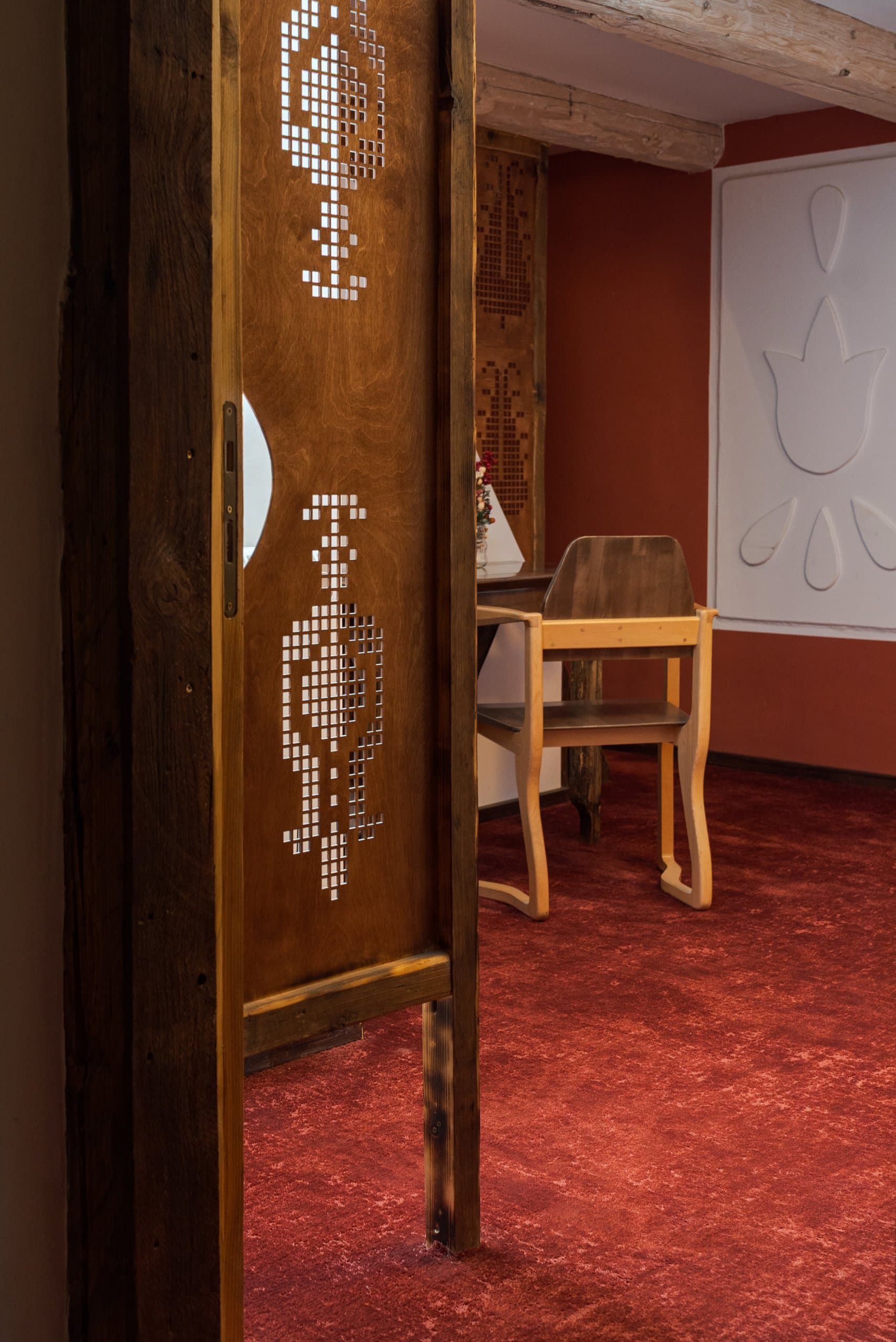
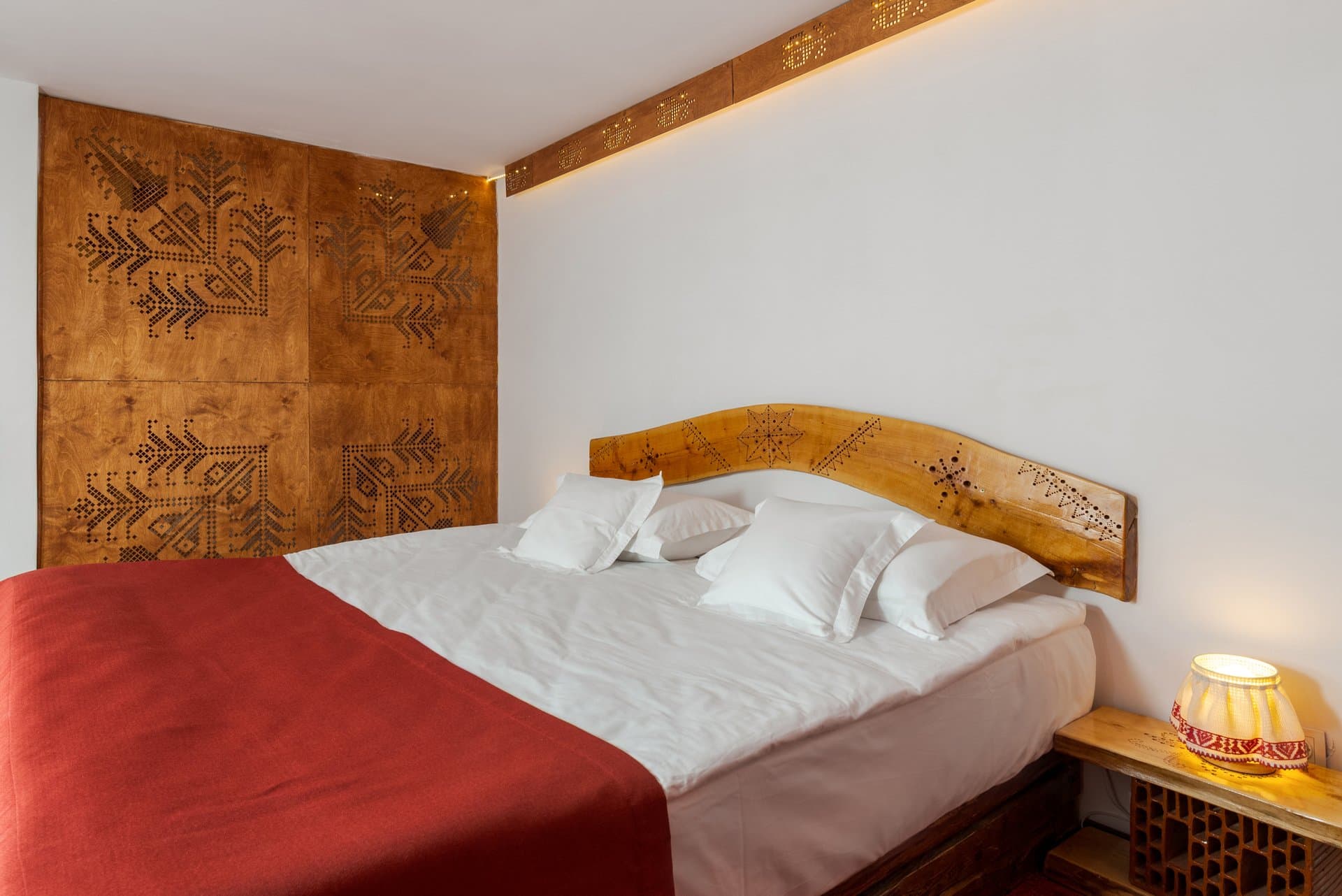
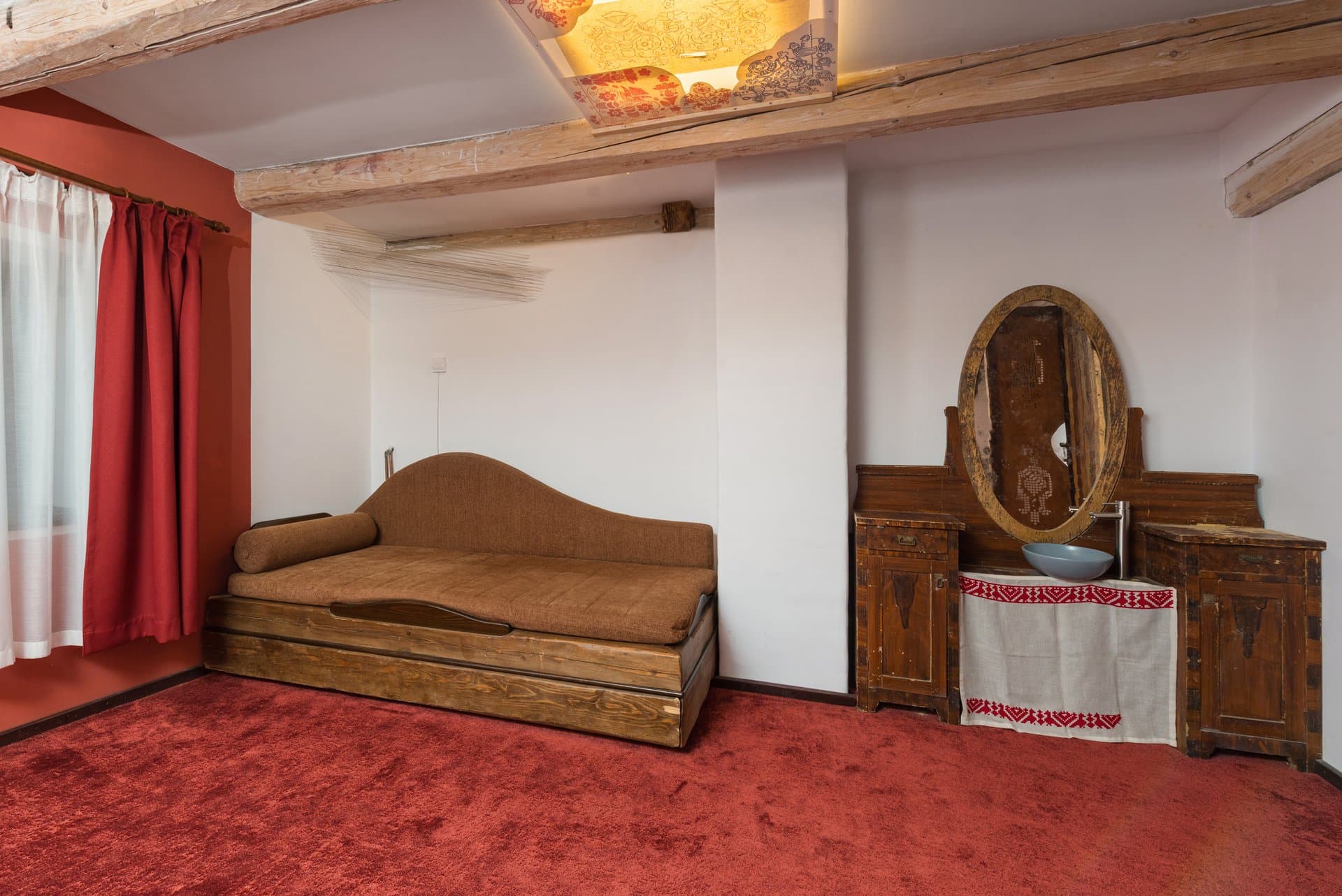
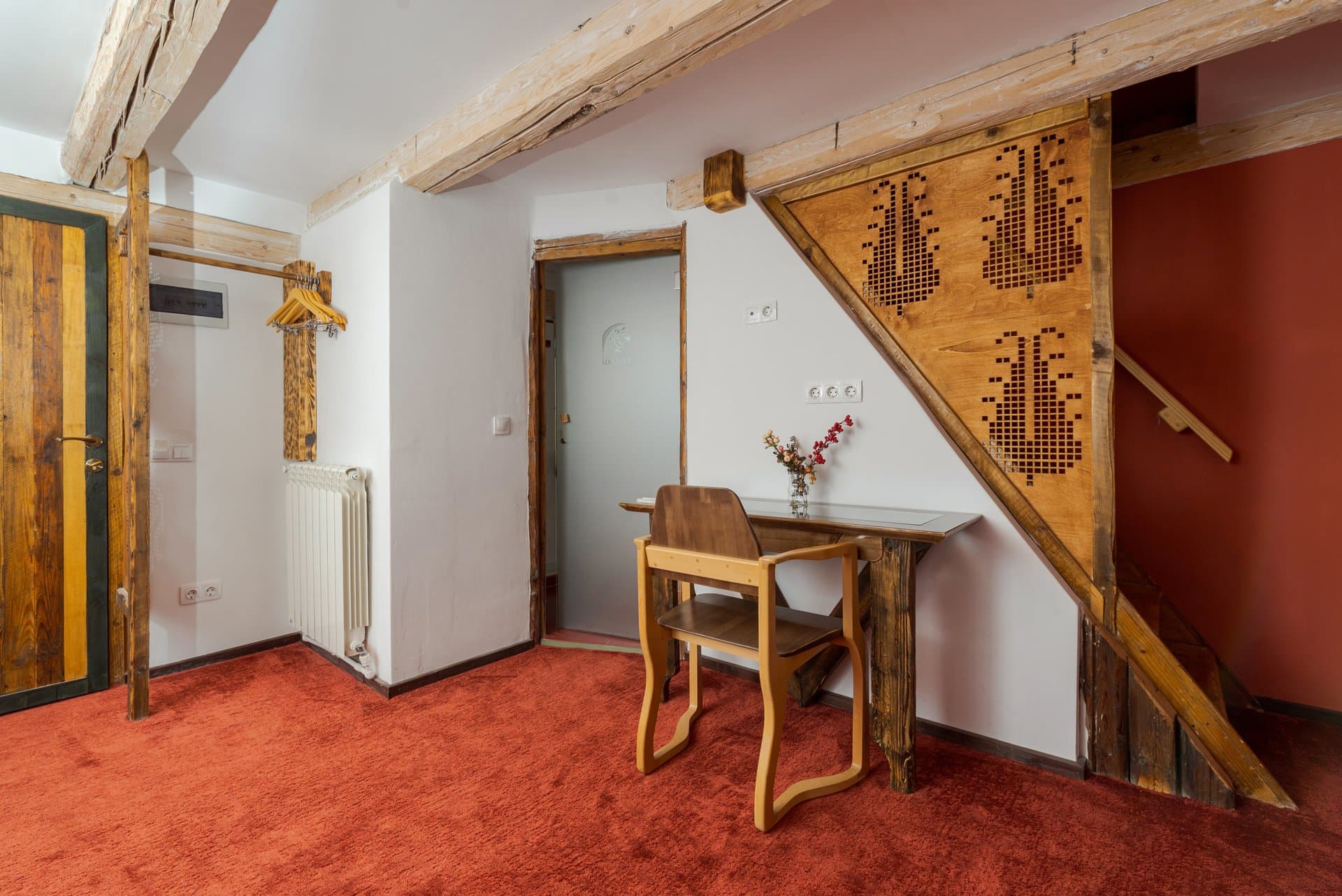
Spread across two levels, this apartment-style studio blends softness, craftsmanship and quiet femininity. The cozy lobby features a sofa that can easily be transformed into an extra bed, while the attic bedroom tucked creates an intimate, storybook atmosphere.
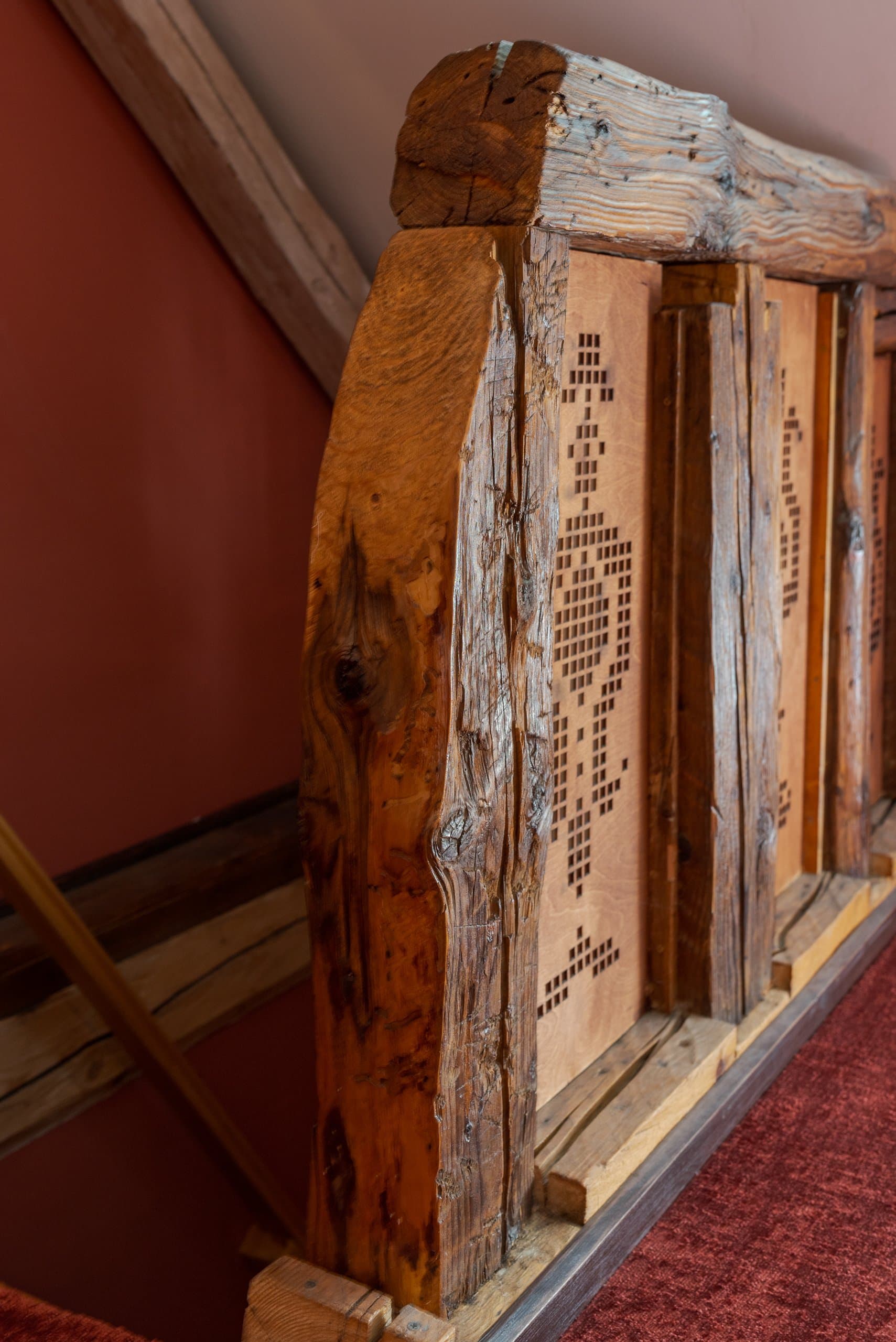
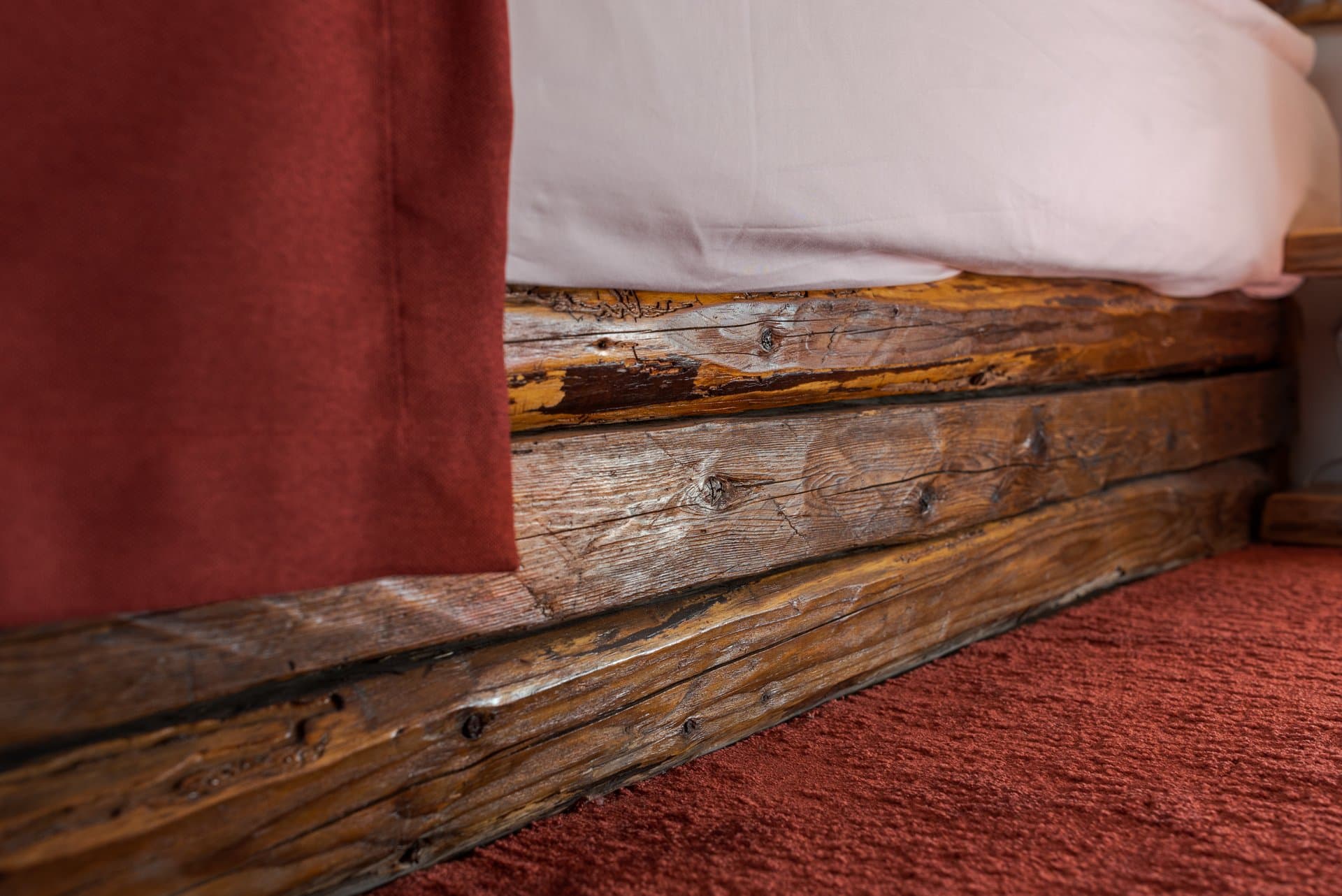
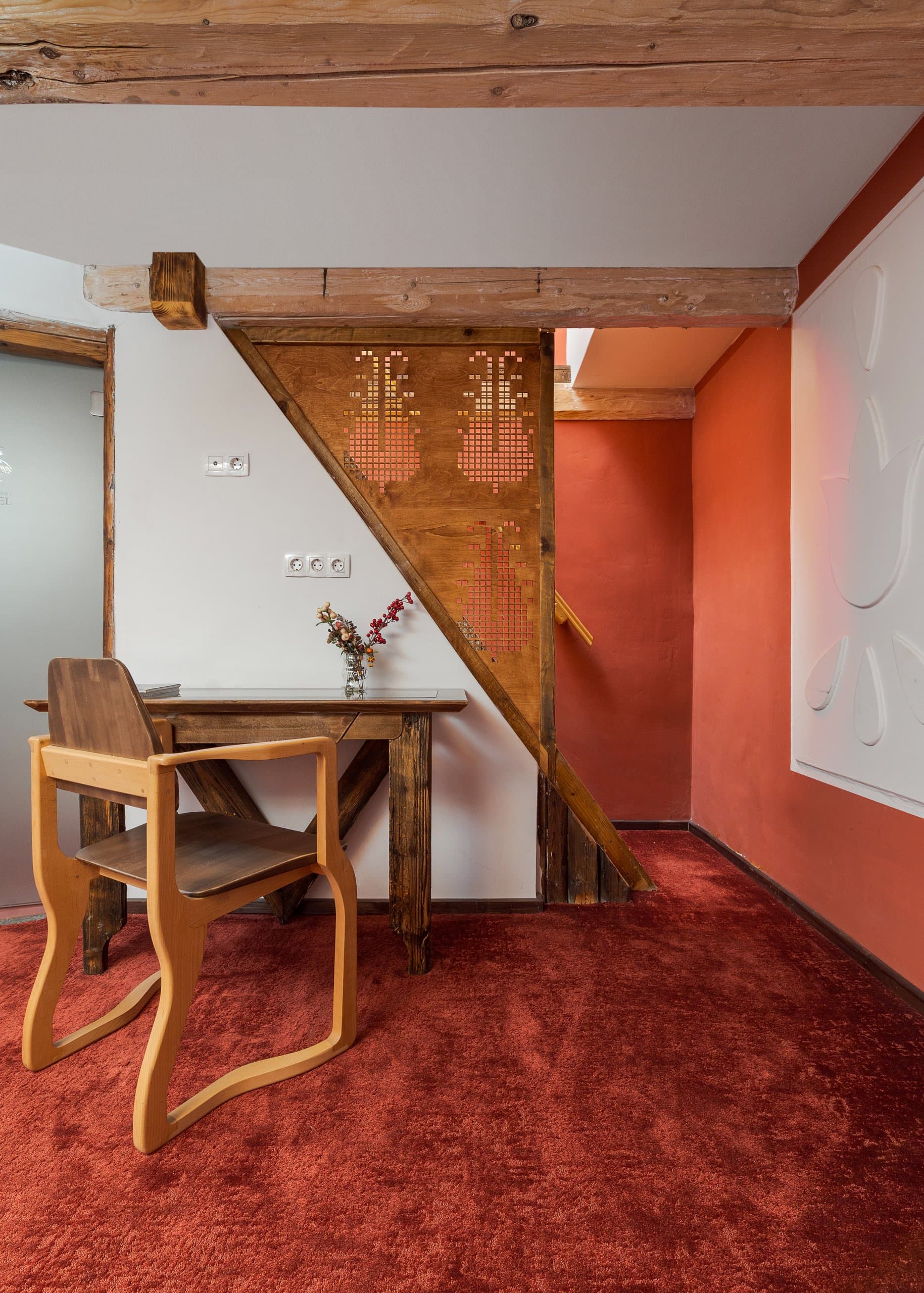
The room pays homage to the delicate craft of embroidery through its gentle color palette, textile-inspired details and carefully layered textures. Repurposed century-old wooden beams have been transformed into unique furniture elements, adding warmth, character and a sense of continuity between past and present. The result is a space that feels both artistic and deeply comforting.
Room Details
Building
Crafts House
Floor
Upper Floor
Bed
King-size double bed
Max Guests
2+1
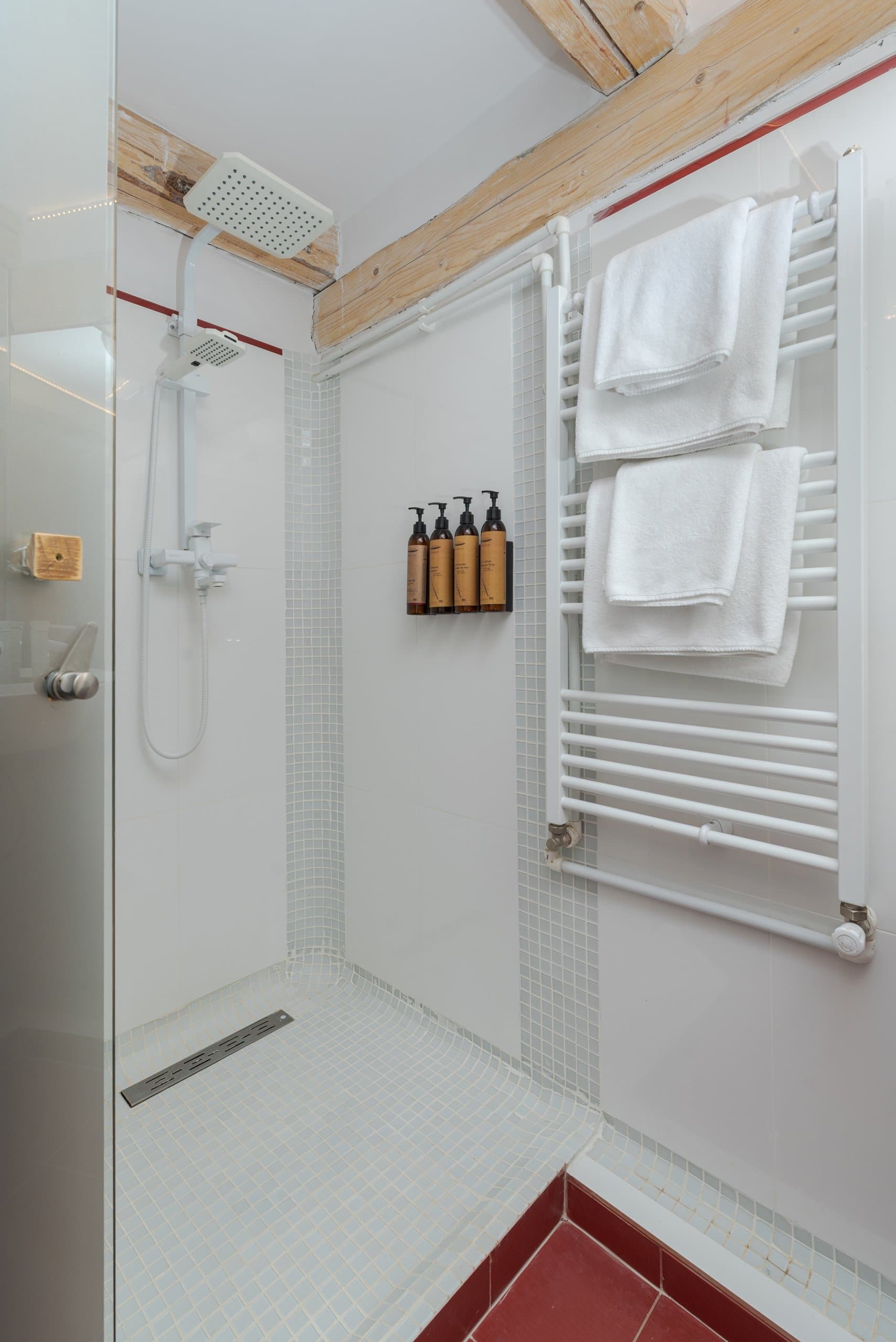
Bathroom
Shower
Extra Bed
couch in the lobby
Amenities
Story
Embroidery
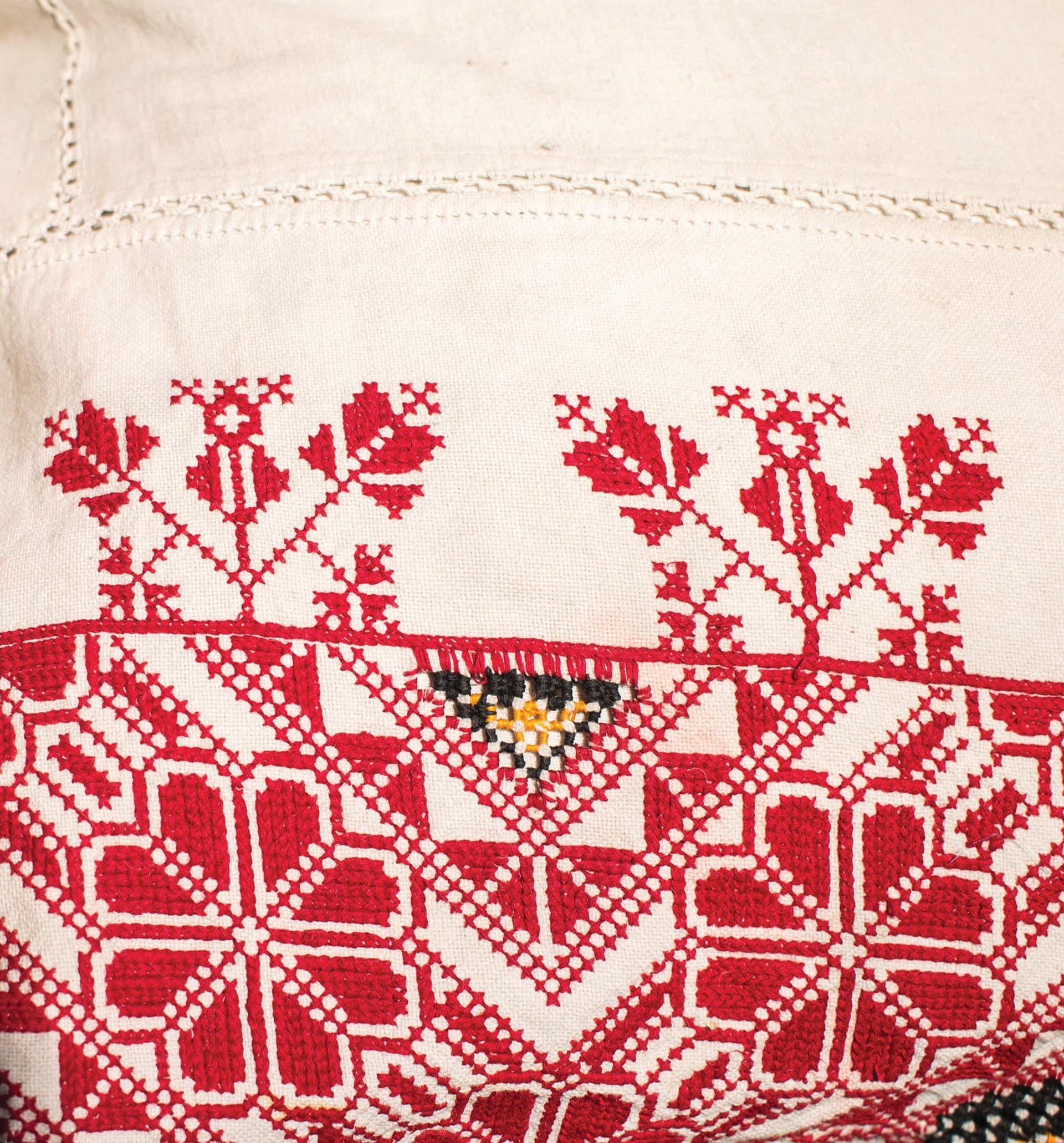
In the former Háromszék the textile material decorated with cross-stitch and freely drawn embroidery (pillow ends, bed sheets, textiles hanging on rods) served from making the space of living more homely. Clothes were not decorated in this way. Their base material was hemp and cotton, rarely the finer cotton fabric. The embroideries from Háromszék are characterized by transparent structure, clear and diverse geometrical and floral patterns and meticulous workmanship.
The traces of the embroidery culture of the 17–18th century nobility's textiles of fine workmanship, i.e. noble embroidery, can also be discovered in the freely drawn embroidery used in peasant culture. In the villages situated at the edge of Barcaság/Ţara Bârsei the densely filled counting thread type embroidery sewn with red yarn was the most favoured. The number of craftsmen skilled in embroidery is decreasing. The passing on of their knowledge and patterns is an important task.