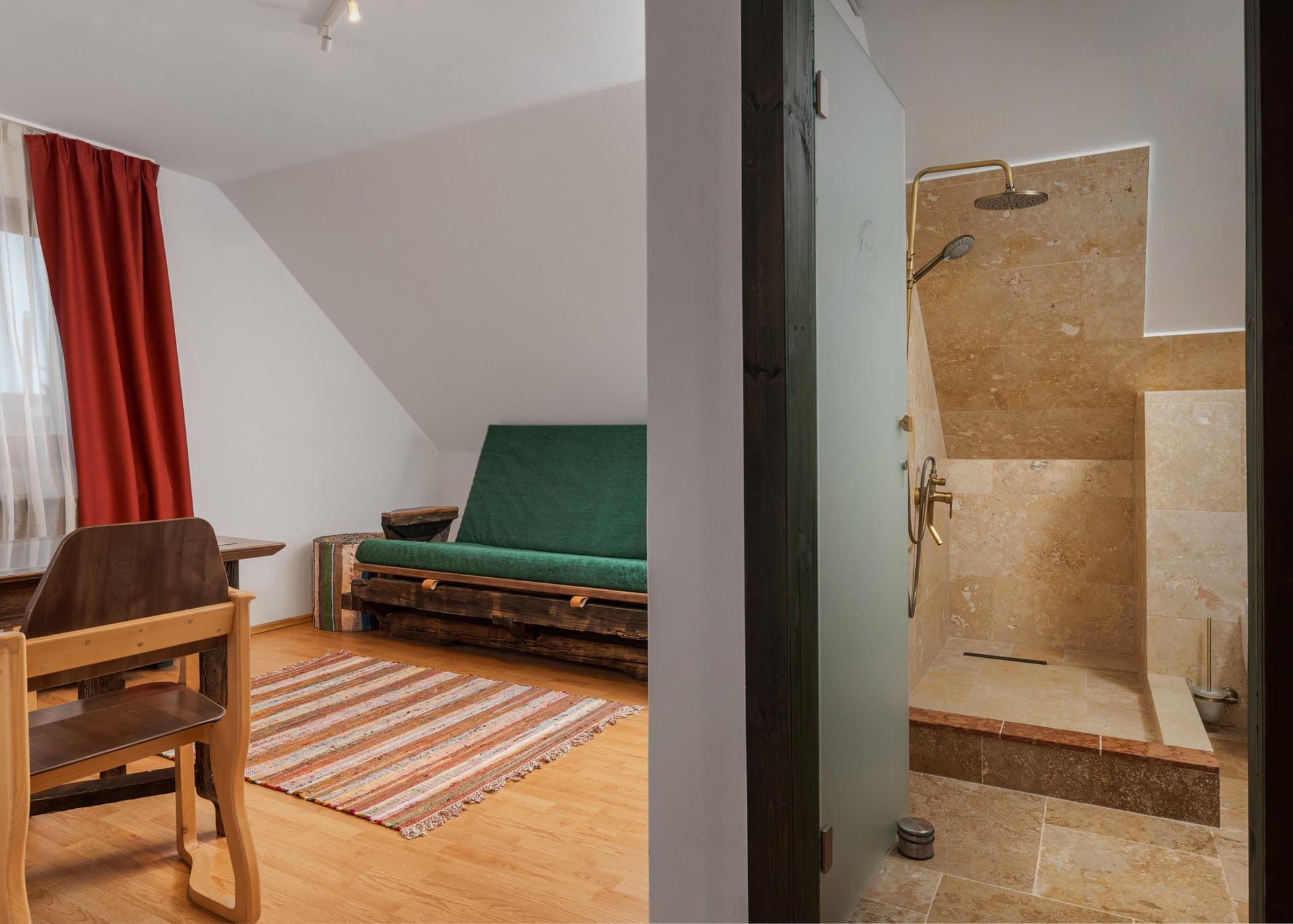
Suita Războiului de Țesut
Contactați-ne pentru mai multe detalii.
Avantajele
camerei
Generoasă și cu o dispunere de tip apartament, camera te invită să încetinești ritmul și să te așezi comod. Holul separat are o canapea extensibilă care se transformă într-un pat suplimentar, ceea ce face spațiul potrivit pentru sejururi mai lungi sau pentru familii. Peste tot, texturile țesute, materialele naturale și detaliile decorative alese cu grijă evocă lumea torsului și a țesutului tradițional, aducând căldură, moliciune și o discretă măiestrie meșteșugărească în fiecare colț.
Detalii cameră
Clădire
Casa Meșteșugarilor
Etaj
Etaj superior
Pat
King-size double bed
Capacitate maximă
2+2
Baie
Duș
Pat suplimentar
extensible couch in the lobby
Dotări
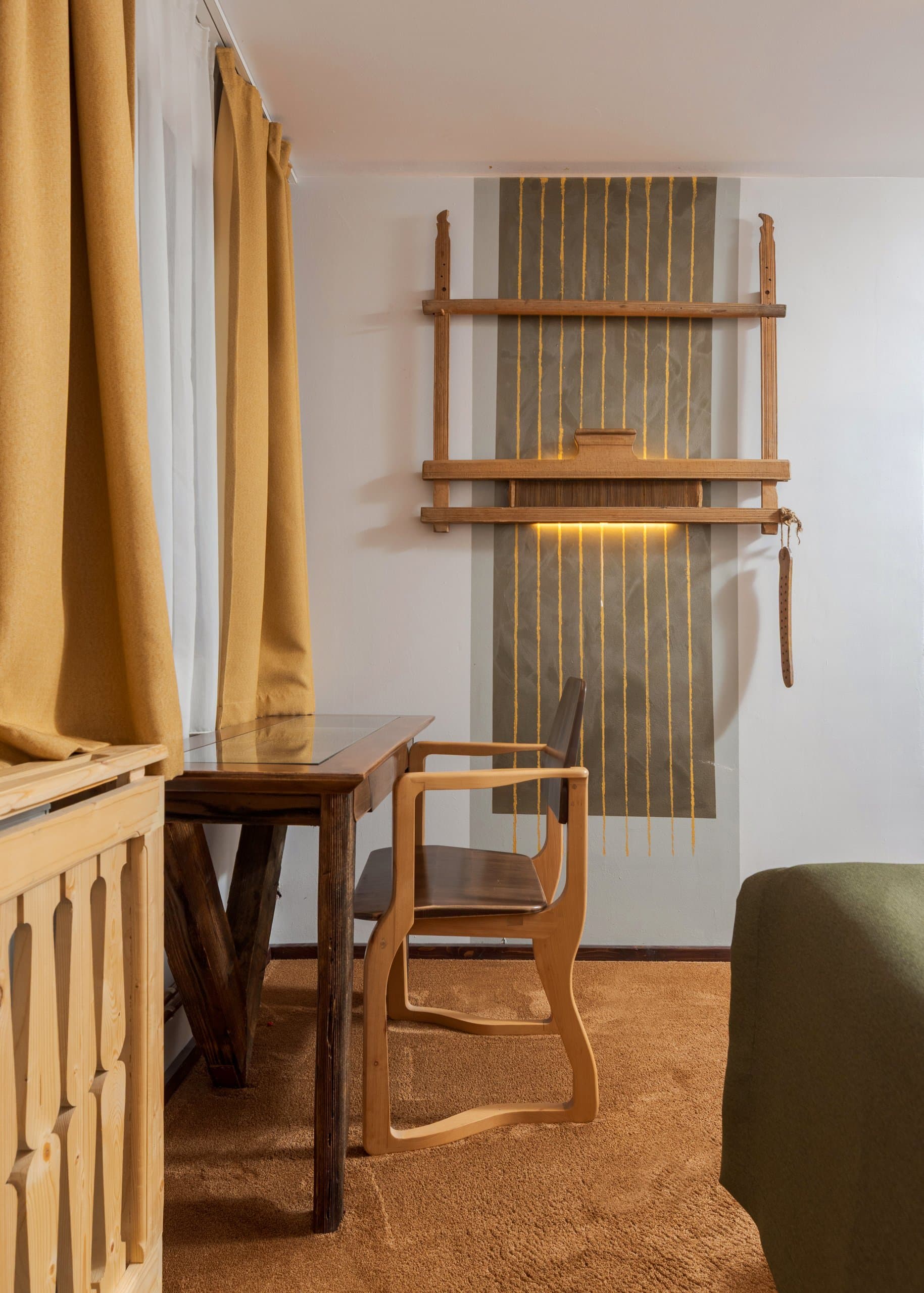
Povestea
torsului și a țesutului
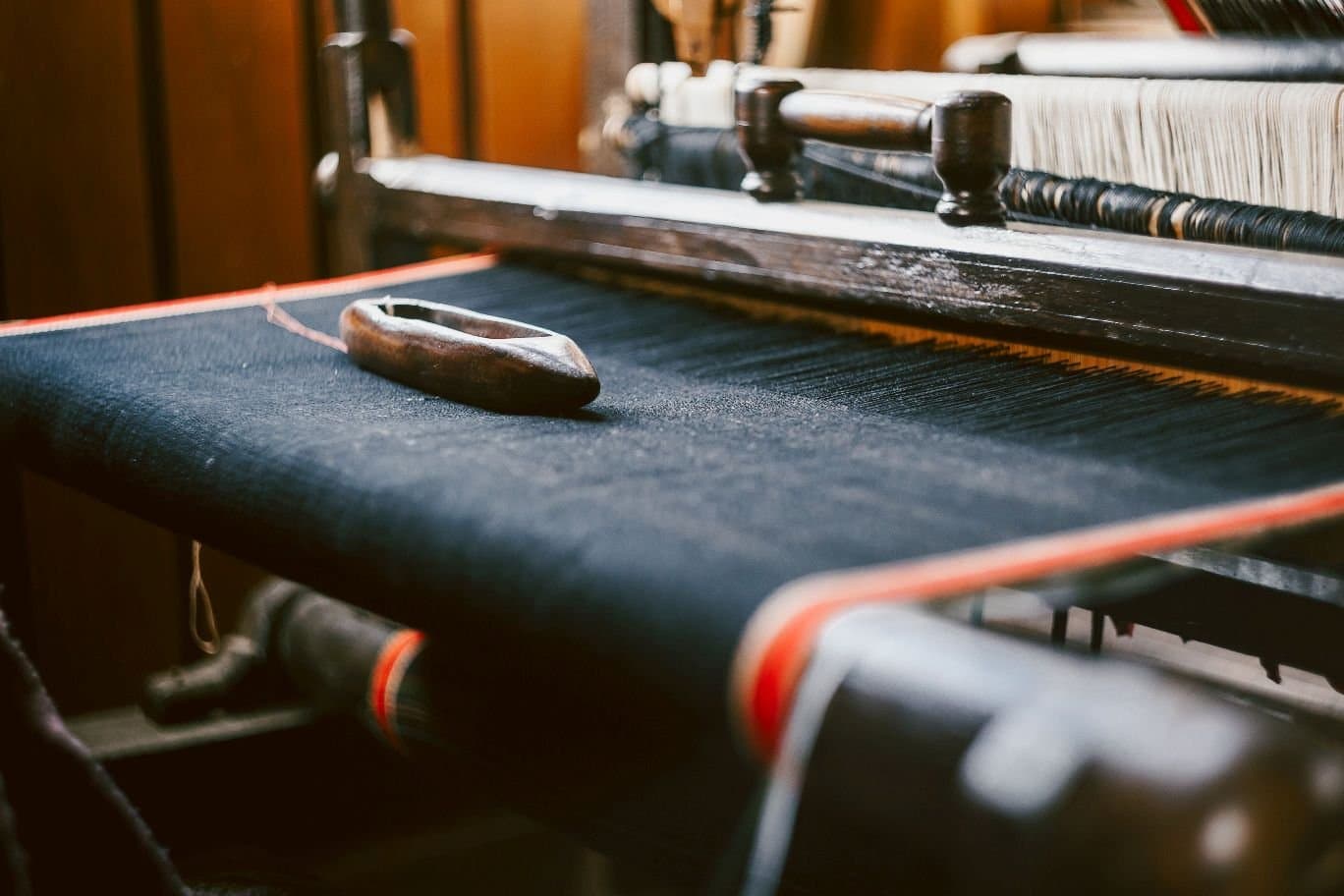
Torsul și țesutul sunt cele mai vechi feluri de a folosi materia primă crescută în satele Ținutului Secuiesc – lâna, inul și cânepa – pentru a face textile. În fiecare familie, specialistele erau, până la începutul secolului al XX-lea, fetele și femeile; ele lucrau chiar hainele membrilor familiei. Din postav de lână făceau haine și textile de casă; din cânepă și in, hainele de zi cu zi și materialele necesare în gospodărie – așternuturi, saltele de paie, saci de grâne și altele. La tors, materialul fibros curățat, legat pe furcă, era răsucit cu fusul pentru a scoate firul, care, înfășurat pe mosor, devenea materia primă a țesutului. Se țesea iarna; războiul de țesut lega firele de urzeală cu cele de bătătură. Încă de la 8–10 ani, fetele contribuiau tot mai mult la aprovizionarea gospodăriei cu textile; își asigurau viitorul propriilor familii țesându-și singure zestrea. Astăzi, torsul se mai practică doar la cursurile de meșteșug; țesutul îl mai fac câteva gospodine iubitoare de tradiție, din plăcere sau pentru un venit în plus.
În atelierul de țesut al lui Csog Jolán din Filia se lucrează și astăzi, în felul tradițional, țesături pentru haine și textile de casă.